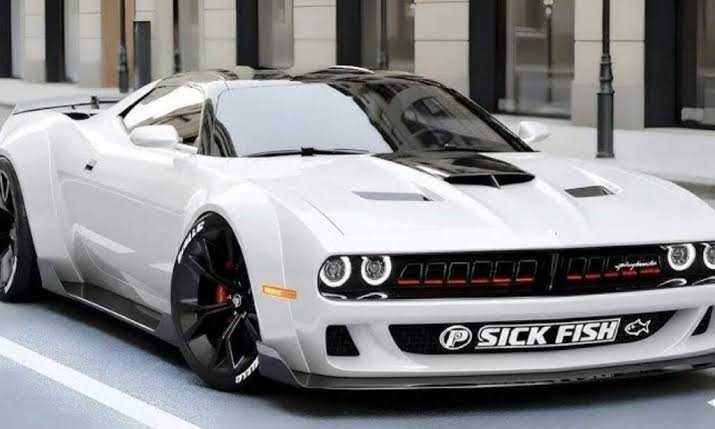
The name “Sick Fish Cuda” sounds like the perfect recipe for a modern American muscle car: classic Plymouth Cuda styling, a powerful engine, modern technology, and the kind of aggressive road presence that made classic Mopar cars famous.
But there is an important detail to understand before looking at its design or performance. There is no officially announced production 2026 Plymouth Sick Fish Cuda. Plymouth is no longer an active new-car brand, and the “Sick Fish” name is associated with a highly customized classic Plymouth Cuda rather than a new factory model. The famous Sick Fish is a heavily modified 1970 Plymouth Cuda that has been updated over the years.
That makes the 2026 Sick Fish Cuda best understood as a modern concept or enthusiast vision inspired by the original car, rather than a confirmed vehicle that buyers can order from a Plymouth dealer.
The Story Behind the Sick Fish Name
The Sick Fish name became famous through a custom 1970 Plymouth Cuda associated with designer Chip Foose and builder Troy Trepanier of Rad Rides by Troy.
The original project took the classic Cuda shape and turned it into a highly refined restomod. Instead of simply restoring the old car, the builders changed the body, chassis, suspension, interior, and other components to create something much more modern while keeping the recognizable Cuda identity.
The car later became part of Joe Rogan’s collection. In 2023, it received another major mechanical and chassis update from the Roadster Shop while keeping its distinctive exterior appearance.
That history is important because many online stories describing a “2026 Plymouth Sick Fish Cuda” are actually using the name to describe a modern interpretation of this famous restomod.
A Classic Cuda Shape With a Modern Attitude
If a modern Sick Fish-inspired Cuda were built today, its biggest attraction would almost certainly be the design.
The classic Cuda had a low, wide stance and muscular proportions. A modern interpretation could keep those basic characteristics while adding cleaner body surfaces, modern lighting, larger wheels, wider tires, and more carefully shaped aerodynamic elements.

The goal would not be to copy the original car piece by piece. Instead, the idea would be to keep the visual character that makes a Cuda recognizable while giving it a more contemporary appearance.
A modern version could naturally focus on:
- A wide and low muscle-car stance
- Sculpted body panels inspired by the classic Cuda
- Modern LED lighting
- Large performance wheels and wide tires
These are design possibilities for a modern concept and should not be treated as confirmed factory equipment.
The Interior Could Blend Old and New
The classic Cuda was built around a simple muscle-car philosophy. A modern Sick Fish would need to combine that character with the comfort and technology expected in a modern performance vehicle.
The cabin could use a driver-focused dashboard, supportive sport seats, digital displays, premium materials, and modern climate and entertainment controls.
The challenge would be keeping the interior from becoming overloaded with screens. A successful restomod would ideally make modern technology feel like part of the original design rather than something added afterward.
The existing Sick Fish build demonstrates this approach. Its modernized interior includes Recaro seating, digital instrumentation, and carbon-fiber details while retaining the character of the classic Cuda.
Performance Is What Makes Sick Fish Special
The original Sick Fish is much more than a cosmetic restoration.
Its later rebuild included a modern chassis and a naturally aspirated 7.0-liter Mercury Marine SB4 V8 producing about 750 horsepower. The updated car was engineered to improve handling and drivability rather than simply increase straight-line power.

That approach is what makes the Sick Fish idea different from a normal classic-car restoration.
A traditional restoration tries to preserve the vehicle as closely as possible to its original specification. A restomod takes the classic appearance and combines it with modern mechanical components.
The Sick Fish philosophy clearly belongs to the second category.
Modern Chassis Technology Changes the Driving Experience
One of the biggest weaknesses of many old muscle cars is that their suspension, brakes, steering, and chassis were designed decades ago.
The updated Sick Fish received major chassis work to make it more capable on modern roads. The Roadster Shop rebuild replaced major portions of the original structure and added modern suspension and braking technology.
That means the car can provide a very different driving experience from a standard 1970 Cuda.
The idea behind a modern Sick Fish is not simply to make the car faster in a straight line. It is to create a vehicle that can accelerate, turn, and stop with greater confidence.
Classic Muscle Meets Modern Engineering
The appeal of a car like Sick Fish comes from the contrast between its appearance and its mechanical technology.
From the outside, it still carries the unmistakable personality of a classic American muscle car. Underneath, however, the vehicle can use modern engineering that would have been impossible to find in the original car.

This combination gives the driver the emotional appeal of a classic Cuda without requiring every part of the driving experience to remain stuck in the 1970s.
That is the basic idea behind modern restomods: preserve the character while improving usability.
What a 2026 Sick Fish Cuda Could Look Like
Because there is no confirmed production 2026 model, exact specifications should not be presented as official.
However, a modern concept based on the Sick Fish philosophy could logically include the following:
| Area | Modern Sick Fish Concept |
|---|---|
| Design | Classic Cuda-inspired muscle-car body |
| Body style | Two-door performance coupe |
| Engine | High-performance V8 concept |
| Drivetrain | Rear-wheel drive concept |
| Interior | Modern driver-focused cabin |
| Displays | Digital instrumentation |
| Seats | Performance-oriented sport seats |
| Suspension | Modern performance suspension |
| Brakes | High-performance braking system |
| Wheels | Large performance wheels |
| Status | Unofficial concept/restomod idea |
These details describe the direction enthusiasts associate with a modern Sick Fish rather than confirmed specifications for a factory-built 2026 Plymouth.
Why the Cuda Name Still Matters
The Plymouth Cuda remains one of the best-known names from the classic American muscle-car era.
The 1970-1974 Cuda and Barracuda models have become highly collectible, especially rare high-performance versions. Their combination of dramatic styling and powerful engines has helped maintain strong interest among muscle-car enthusiasts.
The Sick Fish takes that heritage in a different direction. Instead of treating the classic Cuda as something that should remain untouched, it shows how the design can be adapted for modern driving.
That makes it particularly interesting to people who enjoy both classic cars and modern performance engineering.

The Difference Between a Concept and a Production Car
This is an important point for anyone reading online claims about the “2026 Plymouth Sick Fish Cuda.”
A concept image, digital rendering, custom restomod, and production automobile are not the same thing.
A production vehicle would require an actual manufacturer, confirmed specifications, pricing, production plans, safety certification, and a sales network. There is currently no official evidence that a new 2026 Plymouth Sick Fish Cuda has entered production.
Therefore, claims about an exact horsepower figure, official MSRP, release date, dealership availability, or factory warranty should not be treated as confirmed information.
Could a Modern Cuda Return?
The idea of bringing back the Cuda name remains attractive to muscle-car fans, but a modern production version would face major engineering and business challenges.
Today’s performance cars have to meet modern safety, emissions, efficiency, and technology requirements. A new Cuda would also have to find a place within the current Stellantis performance-car lineup.
That is very different from building a one-off or limited restomod.
For now, the most realistic way to experience the Sick Fish concept is through custom classic Cuda builds and modern restomod projects rather than waiting for an officially announced 2026 Plymouth model.
The Bottom Line
The 2026 Plymouth Sick Fish Cuda is not a confirmed factory production car. Instead, the name is being used online for a modern interpretation of the famous Sick Fish Cuda concept and the broader idea of bringing classic Plymouth muscle-car design into the modern era.

The real Sick Fish is a heavily modified 1970 Plymouth Cuda that has been associated with Chip Foose, Troy Trepanier, and Joe Rogan. Its later rebuild added a modern chassis and a roughly 750-horsepower 7.0-liter V8 while keeping the classic exterior character.
That car shows exactly why the Sick Fish idea remains so appealing. It combines the emotional design of a classic Cuda with modern suspension, braking, chassis engineering, interior technology, and serious performance.
If a new Cuda-inspired car were ever officially developed, the Sick Fish would provide a strong blueprint: classic American muscle on the outside, modern engineering underneath, and a driving experience designed for today’s roads.