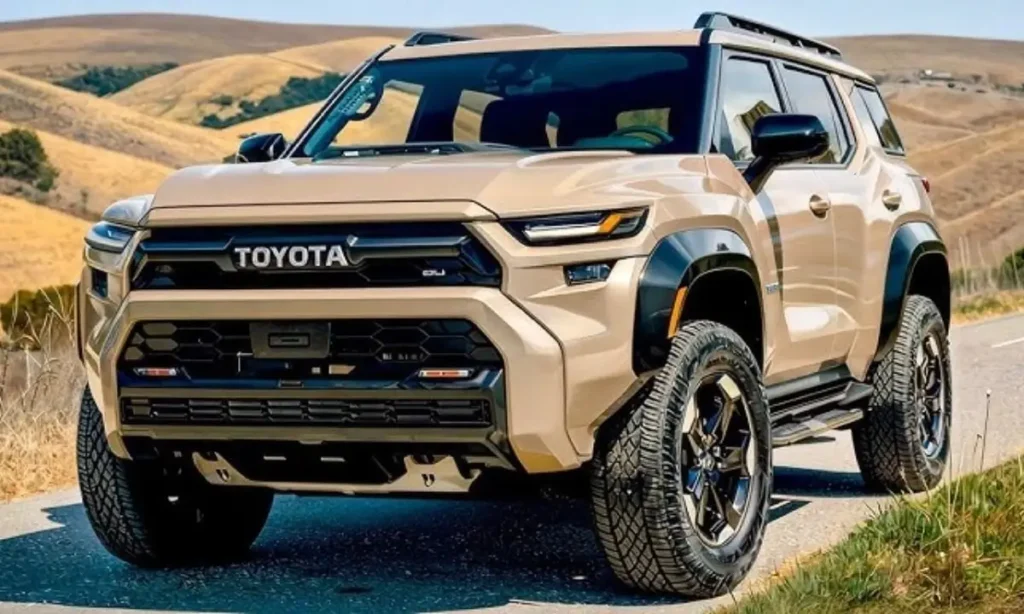
The 2026 Toyota 4Runner continues to combine the rugged character of a traditional SUV with the technology and comfort expected from a modern vehicle. Now in the second year of its sixth generation, the 4Runner offers a wide range of trims, two powertrain choices, available four-wheel drive, and serious off-road equipment.
Toyota has also expanded the lineup with the Platinum and Trailhunter grades, giving buyers more choices between everyday comfort, sporty driving, and serious off-road travel.
A Tougher Exterior Design
The 2026 4Runner keeps the boxy shape that has long been part of its identity. The upright body, high stance, large wheel arches, and strong front end give it a traditional SUV appearance rather than the rounded look of many modern crossovers.
The design also changes depending on the trim. The SR5 provides a simpler appearance, while the TRD Sport adds larger wheels and sport-tuned suspension. The TRD Off-Road focuses more heavily on trail capability, and the TRD Pro and Trailhunter receive more specialized equipment for demanding outdoor use.
The Trailhunter stands out with 33-inch Toyo all-terrain tires, 18-inch bronze wheels, an ARB roof rack, an onboard air compressor, and Old Man Emu suspension components. The TRD Pro also uses 33-inch tires and FOX adjustable shocks.
Two Engines, Including a Powerful Hybrid
The 2026 4Runner offers two main powertrain choices.
The standard 2.4-liter turbocharged i-FORCE engine produces up to 278 horsepower and 317 lb-ft of torque. It is available on several grades and provides the traditional gasoline-powered option.
The available i-FORCE MAX hybrid combines a 2.4-liter turbocharged engine with an electric motor system. It produces up to 326 horsepower and 465 lb-ft of torque, making it the more powerful choice.
| 2026 4Runner Powertrain | Engine | Maximum Power | Maximum Torque |
|---|---|---|---|
| i-FORCE | 2.4L turbocharged 4-cylinder | 278 hp | 317 lb-ft |
| i-FORCE MAX | 2.4L turbocharged hybrid | 326 hp | 465 lb-ft |
The hybrid system is especially useful for buyers who want more power while still improving efficiency compared with a traditional large SUV.
Fuel Economy Is Better Than the Old-School 4Runner Image Suggests
The 4Runner is still a large, body-on-frame SUV designed for capability, so it is not going to match the fuel economy of a small crossover.

However, Toyota has improved efficiency with the newer powertrains. The 2026 models can reach an estimated 23 MPG combined in certain hybrid configurations. Toyota lists projected ratings of up to 20 city and 26 highway MPG for the rear-wheel-drive SR5, TRD Sport, and TRD Sport Premium.
Actual fuel economy will depend on the drivetrain, trim, tires, road conditions, weather, traffic, and driving style.
The hybrid 4Runner is therefore an interesting option for buyers who want strong towing and off-road capability without giving up the benefits of a modern hybrid powertrain.
Built for Off-Road Driving
Off-road capability remains one of the 4Runner’s biggest strengths.
The TRD Off-Road comes with equipment designed specifically for rough terrain, including Bilstein monotube shocks with remote reservoirs, Multi-Terrain Select, and Crawl Control.
Higher-performance versions take things further.
The TRD Pro uses FOX adjustable shocks, a TRD-tuned suspension, a performance air intake, and 33-inch all-terrain tires. The Trailhunter is designed more around overlanding and long-distance outdoor travel, adding equipment such as the ARB roof rack and onboard air compressor.
These features are useful for buyers who regularly travel on trails, sand, rocks, dirt roads, or other difficult surfaces. They are not simply styling upgrades.
Four-Wheel Drive Options
The 2026 4Runner is available with different drivetrain arrangements depending on the trim.
Buyers can choose from two-wheel drive, part-time four-wheel drive, and full-time four-wheel drive configurations. All i-FORCE MAX versions come with four-wheel drive. The Limited and Platinum use full-time four-wheel drive with an electronic locking center differential.

This gives buyers more flexibility. Someone who mainly drives on paved roads can choose a simpler configuration, while serious off-road users can select a model with more advanced four-wheel-drive hardware.
A More Comfortable Interior
Although the 4Runner is built for tough driving, Toyota has not ignored cabin comfort.
Depending on the grade, the SUV can offer SofTex or leather-trimmed seating, heated and ventilated front seats, a power liftgate, larger wheels, premium materials, and other comfort features.
The Limited and Platinum grades are especially focused on comfort. Toyota lists leather-trimmed heated and ventilated front seats for the Limited, while the Platinum adds premium leather-trimmed seats with special perforation and stitching.
This makes the 4Runner more comfortable as a daily vehicle while keeping its rugged character.
Large Screens and Modern Technology
The technology inside the 2026 4Runner is much more modern than the traditional rugged-SUV image might suggest.
The base system uses an 8-inch Toyota Audio Multimedia touchscreen, while a 14-inch touchscreen is available on higher grades. Wireless Apple CarPlay and Android Auto are also available.
The larger screen gives the dashboard a more premium appearance and makes navigation, entertainment, and vehicle information easier to access.
The 4Runner also provides multiple USB charging points and available premium audio equipment depending on the trim.
Safety Technology Comes Standard
Toyota Safety Sense 3.0 is standard across the 2026 4Runner lineup.
The system includes several driver-assistance features designed to help with common driving situations. These include Lane Tracing Assist, Full-Speed Range Dynamic Radar Cruise Control, and other systems intended to help monitor traffic and keep the vehicle positioned on the road.
Blind Spot Monitor is also available as part of the standard safety equipment, and Toyota says the system can recognize when a trailer is being towed and extend its detection area.
These systems are designed to assist the driver. They do not replace the need for the driver to remain alert and in control.
Useful Towing Technology
The 4Runner is also designed to handle trailers and recreational equipment.
Available towing technology includes a trailer brake controller, digital rear-view mirror, and Trailer Back-Up Guide with Straight Path Assist. The system uses cameras and sensors to help make reversing with a trailer easier.
This can be especially useful for owners who use the 4Runner for boats, campers, trailers, or other recreational equipment.
The exact towing capacity depends on the configuration and equipment, so buyers should check the rating for the specific model they are considering.
Nine Trim Levels Give Buyers Plenty of Choice
Toyota offers nine 4Runner grades for 2026: SR5, TRD Sport, TRD Sport Premium, TRD Off-Road, TRD Off-Road Premium, Limited, Platinum, TRD Pro, and Trailhunter.
| 2026 4Runner Trim | Starting MSRP | Main Focus |
|---|---|---|
| SR5 | $42,070 | Everyday SUV |
| TRD Sport | $48,550 | Sportier road driving |
| TRD Sport Premium | $53,910 | Sport and comfort |
| TRD Off-Road | $50,490 | Trail capability |
| TRD Off-Road Premium | $56,270 | Off-road and comfort |
| Limited | $56,700 | Luxury and comfort |
| Platinum | $64,160 | Premium features |
| Trailhunter | $68,200 | Overlanding and off-road |
| TRD Pro | $68,400 | Maximum off-road focus |
The prices shown are U.S. starting MSRPs and can change with options, taxes, registration, dealer charges, and other costs. Toyota’s current U.S. pricing lists the SR5 at $42,070 and the TRD Pro at $68,400.
Which 4Runner Is Right for You?
The SR5 is the most straightforward choice for buyers who want the 4Runner’s rugged design without paying for specialized equipment.

The TRD Sport is better for people who spend most of their time on paved roads but want a sportier appearance and suspension setup.
The TRD Off-Road is the more natural choice for serious trail users. The TRD Off-Road Premium adds additional comfort equipment.
The Limited and Platinum focus more heavily on luxury and everyday comfort, while the TRD Pro and Trailhunter are aimed at buyers who want maximum outdoor capability.
The Trailhunter is particularly interesting for overlanding because it comes with equipment designed around extended outdoor travel rather than simply aggressive styling.
Practicality for Families and Adventure
The 4Runner can seat up to seven people depending on configuration. Toyota also offers a power rear window, which remains one of the vehicle’s distinctive practical features.
That combination of passenger space, cargo room, four-wheel-drive capability, and towing technology makes the 4Runner useful for more than weekend off-roading.
It can serve as a family SUV during the week and an adventure vehicle on the weekend.
The trade-off is that its rugged construction and off-road hardware make it less focused on fuel economy and easy city driving than smaller crossover SUVs.
Is the 2026 Toyota 4Runner Worth Buying?
The 2026 4Runner makes the most sense for buyers who actually want the capabilities that come with a body-on-frame SUV.
If your driving is almost entirely in the city, a smaller crossover may provide better fuel economy, easier parking, and a smoother urban experience.

But if you want a vehicle that can handle rough roads, tow recreational equipment, carry outdoor gear, and still provide modern comfort, the 4Runner becomes much more appealing.
The availability of the i-FORCE MAX hybrid is also a major advantage. With 326 horsepower and 465 lb-ft of torque, it provides strong performance while giving buyers another option besides the standard turbocharged engine.
The Bottom Line
The 2026 Toyota 4Runner stays true to its rugged roots while adding the technology, comfort, and powertrain choices expected from a modern SUV.
The standard turbocharged engine produces up to 278 horsepower, while the i-FORCE MAX hybrid increases output to 326 horsepower and 465 lb-ft of torque. Buyers can choose from nine trims, ranging from the practical SR5 to the highly equipped Platinum, TRD Pro, and Trailhunter.
The starting MSRP is $42,070 in the U.S., while the most specialized TRD Pro and Trailhunter models are priced around $68,000.
Overall, the 2026 Toyota 4Runner offers a strong mix of old-school SUV toughness and modern technology. It is not the most efficient or smallest SUV on the road, but that is not its purpose. Its real strength is giving drivers the freedom to move from everyday roads to difficult trails without changing vehicles.